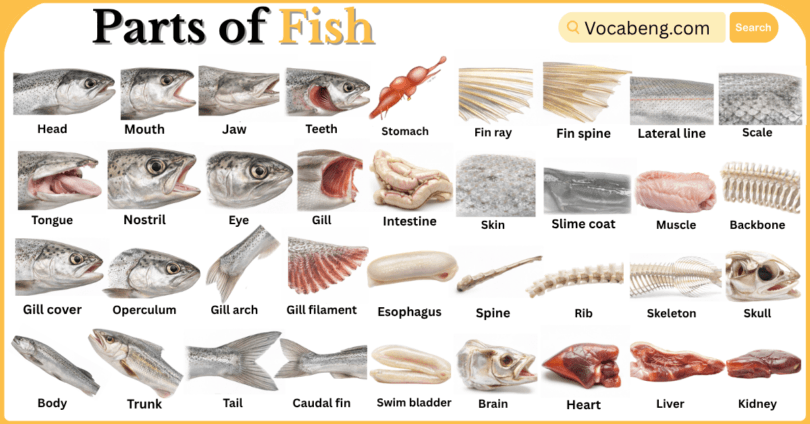

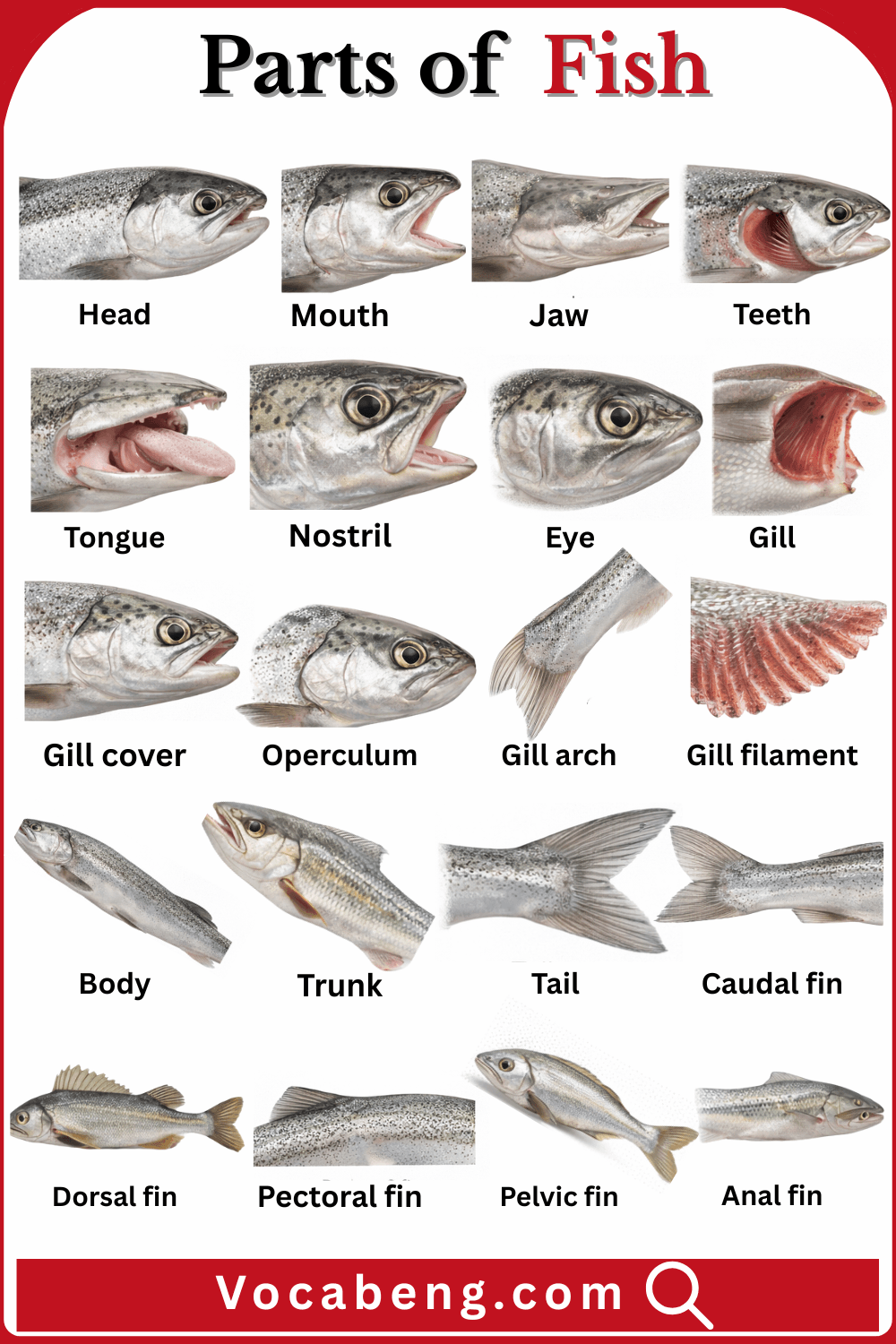
Parts of Fish with Names list
- Head
- Mouth
- Jaw
- Teeth
- Tongue
- Nostril
- Eye
- Gill
- Gill cover
- Operculum
- Gill arch
- Gill filament
- Body
- Trunk
- Tail
- Caudal fin
- Dorsal fin
- Pectoral fin
- Pelvic fin
- Anal fin
Fish Parts Names in English with there Pictures
- Head
Front part of the fish containing the brain, sensory organs, mouth, and gills, responsible for feeding, sensing, and guiding movement.
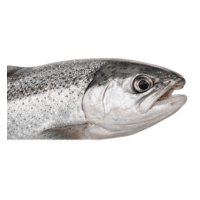
- Mouth
Opening at the front of the head used for taking in food and water.
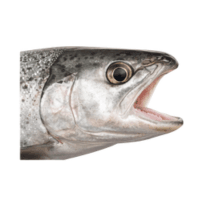
- Jaw
Bony structure supporting the mouth, allowing opening and closing for feeding.
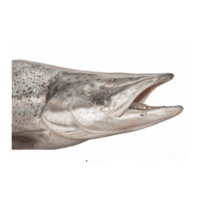
- Teeth
Small hard structures in the mouth used to grasp, crush, or tear food.
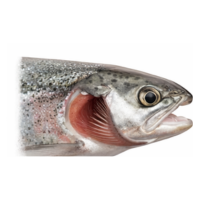
- Tongue
Muscular organ in the mouth that helps move food and assists in swallowing.
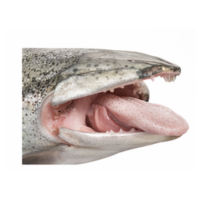
- Nostril
Paired openings on the head used for detecting smells in water.
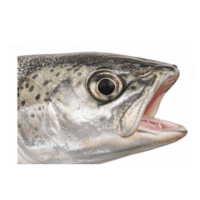
- Eye
Organ for vision, allowing the fish to see its environment and detect movement or predators.
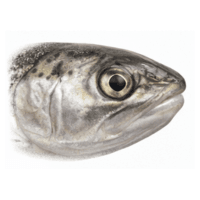
- Gill
Respiratory organ that extracts oxygen from water and releases carbon dioxide.
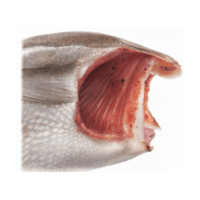
- Gill cover
Protective bony flap (operculum) that shields the gills and assists in water flow.
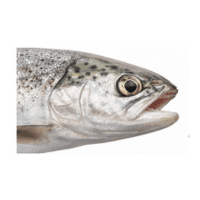
- Operculum
Hard bony plate covering the gill chamber, aiding in respiration and protection.
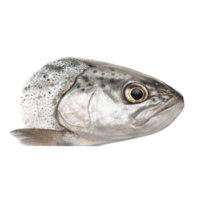
- Gill arch
Curved bony structure supporting gill filaments and maintaining gill shape.
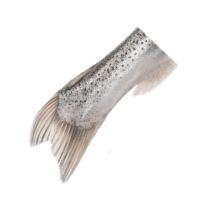
- Gill filament
Thin, feathery structures on gills where gas exchange occurs with water.
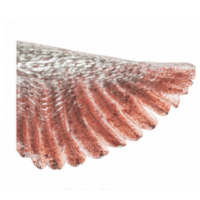
- Body
Main part of the fish containing organs, muscles, and skeleton, giving shape and enabling movement.
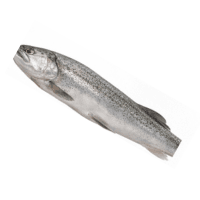
- Trunk
Central part of the body between head and tail that houses vital organs.
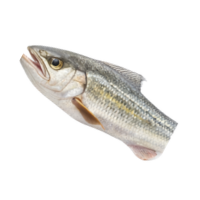
- Tail
Posterior end of the fish used for propulsion and steering.
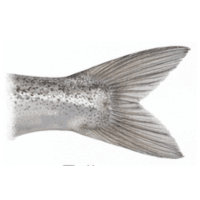
- Caudal fin
Fin at the tail end that provides thrust and aids in swimming.
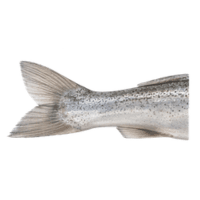
- Dorsal fin
Fin on the back that helps with balance and stability during swimming.
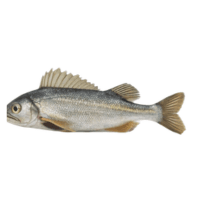
- Pectoral fin
Paired fins near the head used for steering, lifting, and maneuvering.
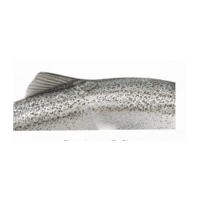
- Pelvic fin
Paired fins on the underside that assist in balance and directional control.
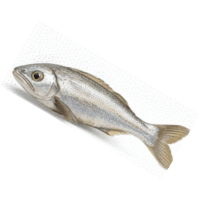
- Anal fin
Fin located on the underside near the tail, aiding in stability and preventing rolling.
Fish Parts Names in English with there Pictures
Explore Fish parts and Name
- Fin ray
- Fin spine
- Lateral line
- Scale
- Skin
- Slime coat
- Muscle
- Backbone
- Spine
- Rib
- Skeleton
- Skull
- Brain
- Heart
- Liver
- Kidney
- Stomach
- Intestine
- Esophagus
- Swim bladder
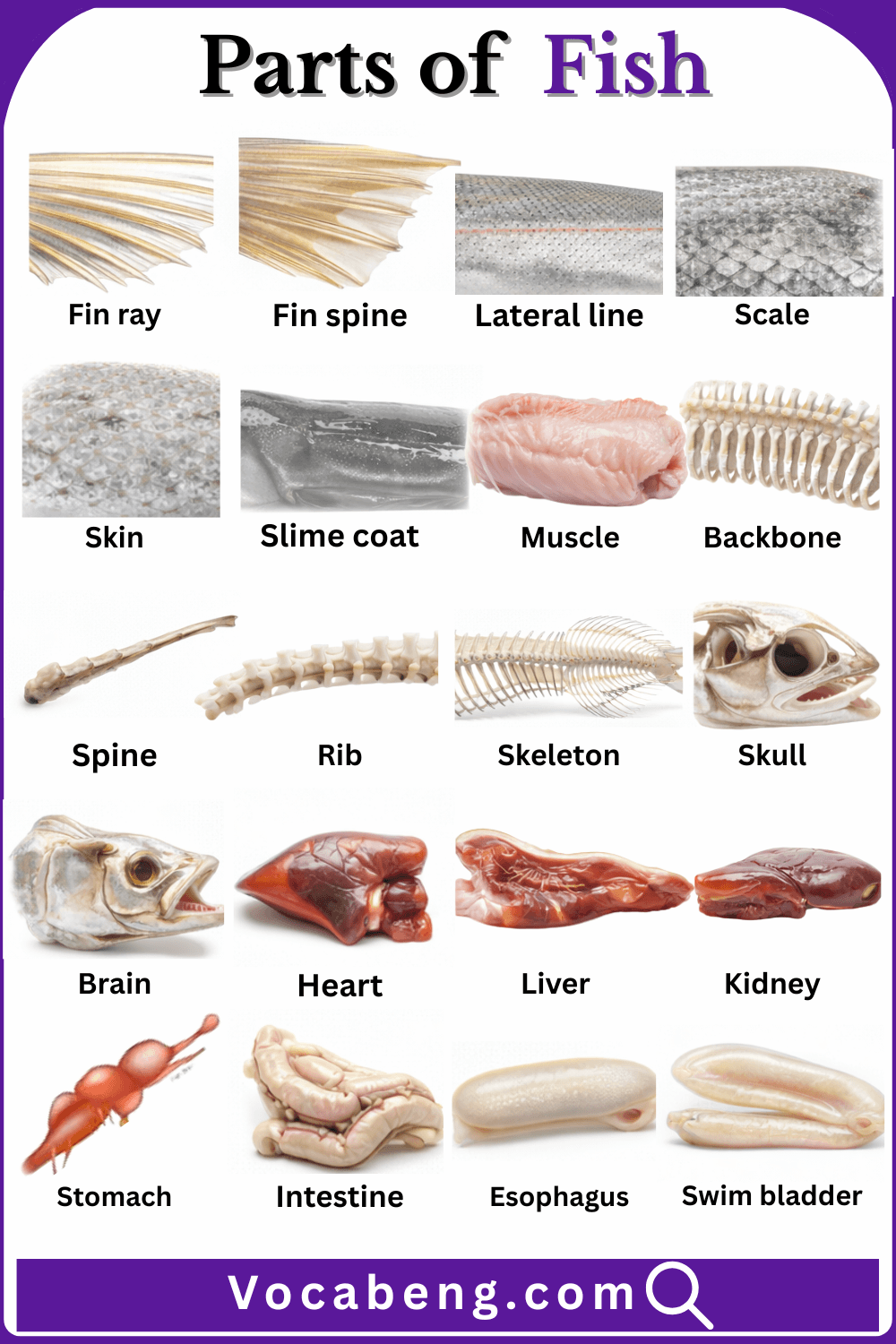
Common Parts of Fish with their Names and Pictures
- Fin ray
Bony or cartilaginous structures supporting fins, providing shape, flexibility, and aiding in swimming, balance, and maneuverability.
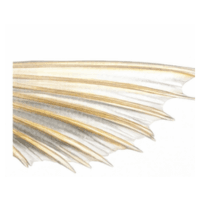
- Fin spine
Rigid, pointed support in fins, offering protection and structural stability while helping maintain balance in water.
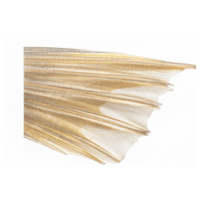
- Lateral line
Sensory system along the body detecting vibrations and water movement, helping fish sense predators, prey, and surroundings.
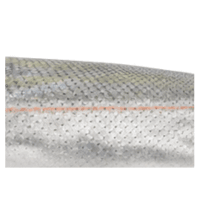
- Scale
Small, overlapping plates covering the skin, protecting the fish from injury, parasites, and water loss.
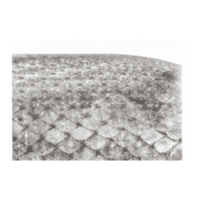
- Skin
Outer tissue layer covering the body, providing protection, flexibility, and housing glands that secrete mucus.
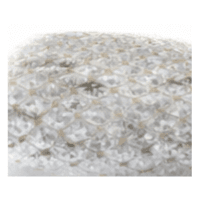
- Slime coat
Mucus layer on skin reducing friction, preventing infection, and aiding smooth movement in water.
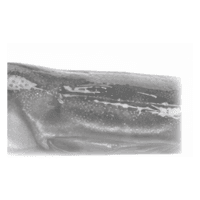
- Muscle
Tissue enabling movement, swimming, and fin operation; provides power for propulsion and flexibility.
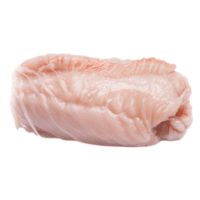
- Backbone
Series of vertebrae forming the central support, protecting the spinal cord and supporting body structure.
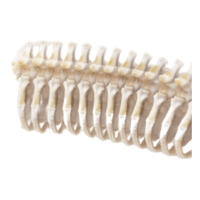
- Spine
Bony projections of vertebrae supporting fins and protecting the spinal cord.
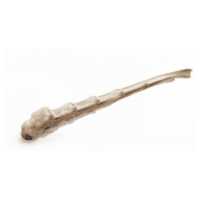
- Rib
Bony structures encasing internal organs, providing support and protection.
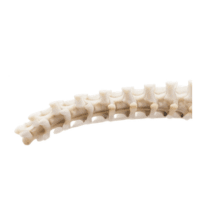
- Skeleton
Internal bony or cartilaginous framework supporting the body, fins, and internal organs.
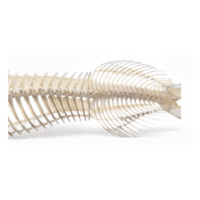
- Skull
Bony structure protecting the brain, eyes, and sensory organs, forming the head framework.
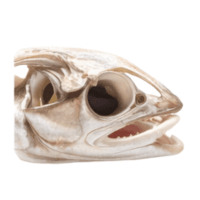
- Brain
Organ controlling nervous system functions, coordinating movement, senses, and survival responses.
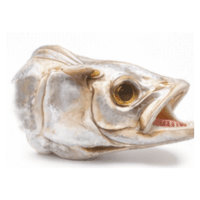
- Heart
Muscular organ pumping blood throughout the body, supplying oxygen and nutrients to tissues.
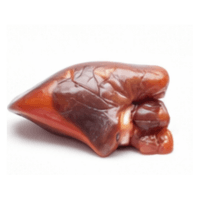
- Liver
Organ involved in digestion, detoxification, and storage of nutrients.
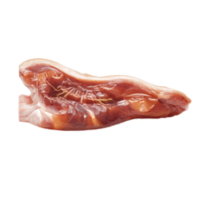
- Kidney
Organ filtering blood, regulating water, salt balance, and excreting waste.
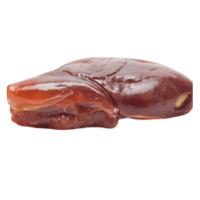
- Stomach
Digestive organ breaking down food with enzymes and acids before passing to intestines.
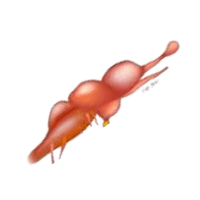
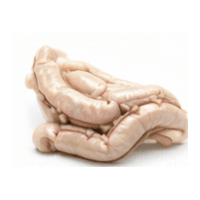
- Intestine
Tube transporting and absorbing nutrients from digested food.
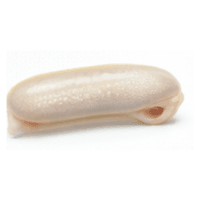
- Esophagus
Tube connecting mouth to stomach, enabling food passage.
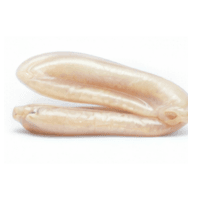
- Swim bladder
Gas-filled organ allowing buoyancy control, helping the fish maintain depth without sinking.
Common Parts of Fish with their Names and Pictures
Learn more helpful articles