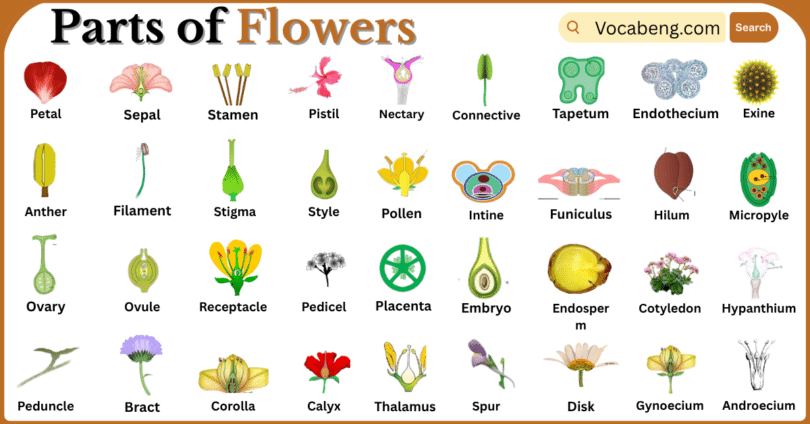

Flowers are important reproductive structures of flowering plants, with different parts working together in pollination, fertilization, and seed production. Their main parts include petals, sepals, stamens, anthers, filaments, stigmas, styles, and ovaries, each having a specific structure and function. Learning the names of flower parts is a useful way to improve English vocabulary while developing a basic understanding of plant biology. In this article, you will learn parts of a flower in English with clear pictures, helping kids, students, teachers, beginners, gardeners, and English learners easily identify, understand, remember, and use these botanical terms with confidence.
Common Parts of Flower and Name
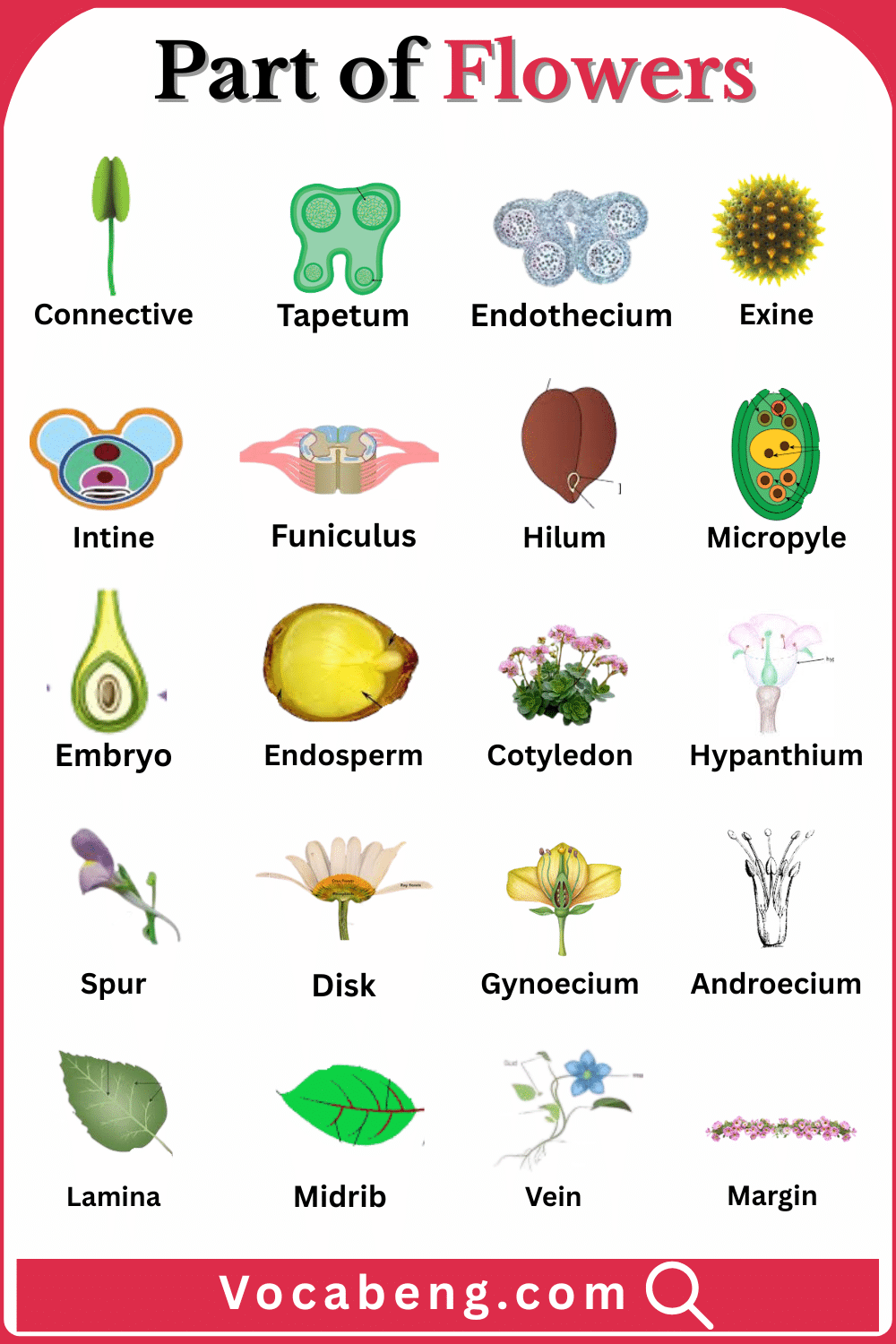
- Connective
- Tapetum
- Endothecium
- Exine
- Intine
- Funiculus
- Hilum
- Micropyle
- Embryo
- Endosperm
- Cotyledon
- Hypanthium
- Spur
- Disk
- Gynoecium
- Androecium
- Lamina
- Midrib
- Vein
- Margin
Explore Parts of Flowers with their Names and images
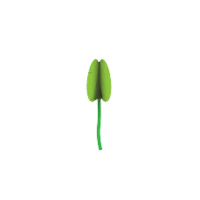
- Connective
Connective is the part of the stamen that joins the two lobes of the anther. It supports the pollen sacs and helps in holding them together for proper pollen development and release.
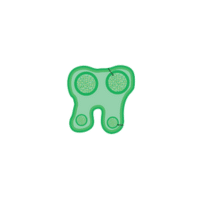
- Tapetum
Tapetum is the inner layer of the anther wall that provides nutrients to developing pollen grains. It plays an important role in pollen formation and helps in their proper growth.
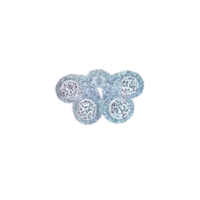
- Endothecium
Endothecium is a layer of cells inside the anther wall that helps in the opening of the anther. It assists in releasing pollen grains when they are fully developed.
- Exine
Exine is the outer layer of a pollen grain. It is tough and protective, often having patterns that help in identification and protect the pollen from damage.

- Intine
Intine is the inner layer of a pollen grain, lying beneath the exine. It is thin and helps in the growth of the pollen tube during fertilization.

- Funiculus
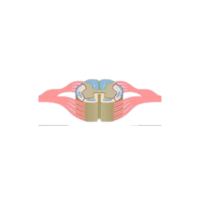
Funiculus is the stalk that attaches the ovule to the ovary wall. It helps in supplying nutrients to the developing ovule inside the flower.
- Hilum
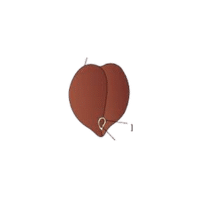
Hilum is the point where the funiculus attaches to the ovule or seed. It appears as a small mark and shows the connection point for nutrient flow.
- Micropyle
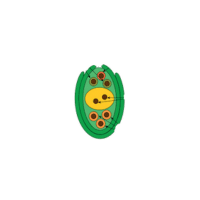
Micropyle is a small opening in the ovule through which the pollen tube enters for fertilization. It also helps in water absorption during seed germination.
- Embryo
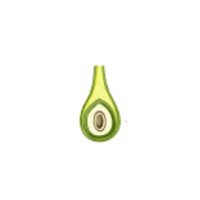
Embryo is the young developing plant inside the seed. It forms after fertilization and later grows into a new plant under suitable conditions.
- Endosperm
Endosperm is the tissue inside a seed that stores food for the developing embryo. It provides nutrients needed for growth during early stages.
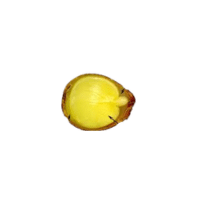
- Cotyledon
Cotyledon is the first leaf or seed leaf of the embryo. It stores or absorbs nutrients and supports the young plant during early growth.
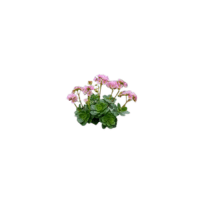
- Hypanthium
Hypanthium is a cup-shaped structure formed by the fusion of the base of sepals, petals, and stamens. It surrounds or supports the ovary in some flowers.
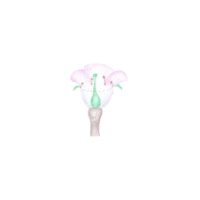
- Spur
Spur is a tube-like extension of a flower part, usually containing nectar. It attracts pollinators by providing a place where nectar is stored.
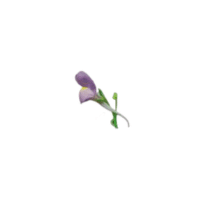
- Disk
Disk is a ring-like structure found at the base of the ovary or petals. It often secretes nectar and helps in attracting pollinators.
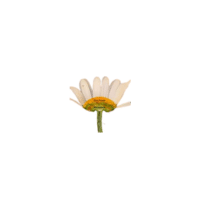
- Gynoecium
Gynoecium is the female reproductive part of a flower, made up of one or more carpels. It includes the ovary, style, and stigma, and is responsible for seed formation.
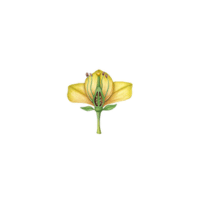
- Androecium
Androecium is the male reproductive part of a flower, consisting of stamens. Each stamen produces pollen, which is necessary for fertilization.
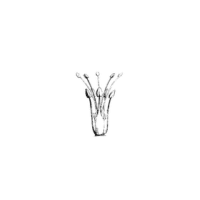
- Lamina
Lamina is the flat, broad part of a leaf. It helps in photosynthesis by capturing sunlight and allows gas exchange through its surface.

- Midrib
Midrib is the main central vein of a leaf. It provides support and helps in the transport of water and nutrients throughout the leaf.

- Vein
Vein is a network of vessels in a leaf that carries water, minerals, and food. It also provides structure and support to the leaf.

- Margin
Margin is the outer edge of a leaf. It can be smooth, serrated, or lobed and plays a role in leaf identification and classification.
Explore Parts of Flowers with their Names and images
List of Parts of Flowers with Name in English
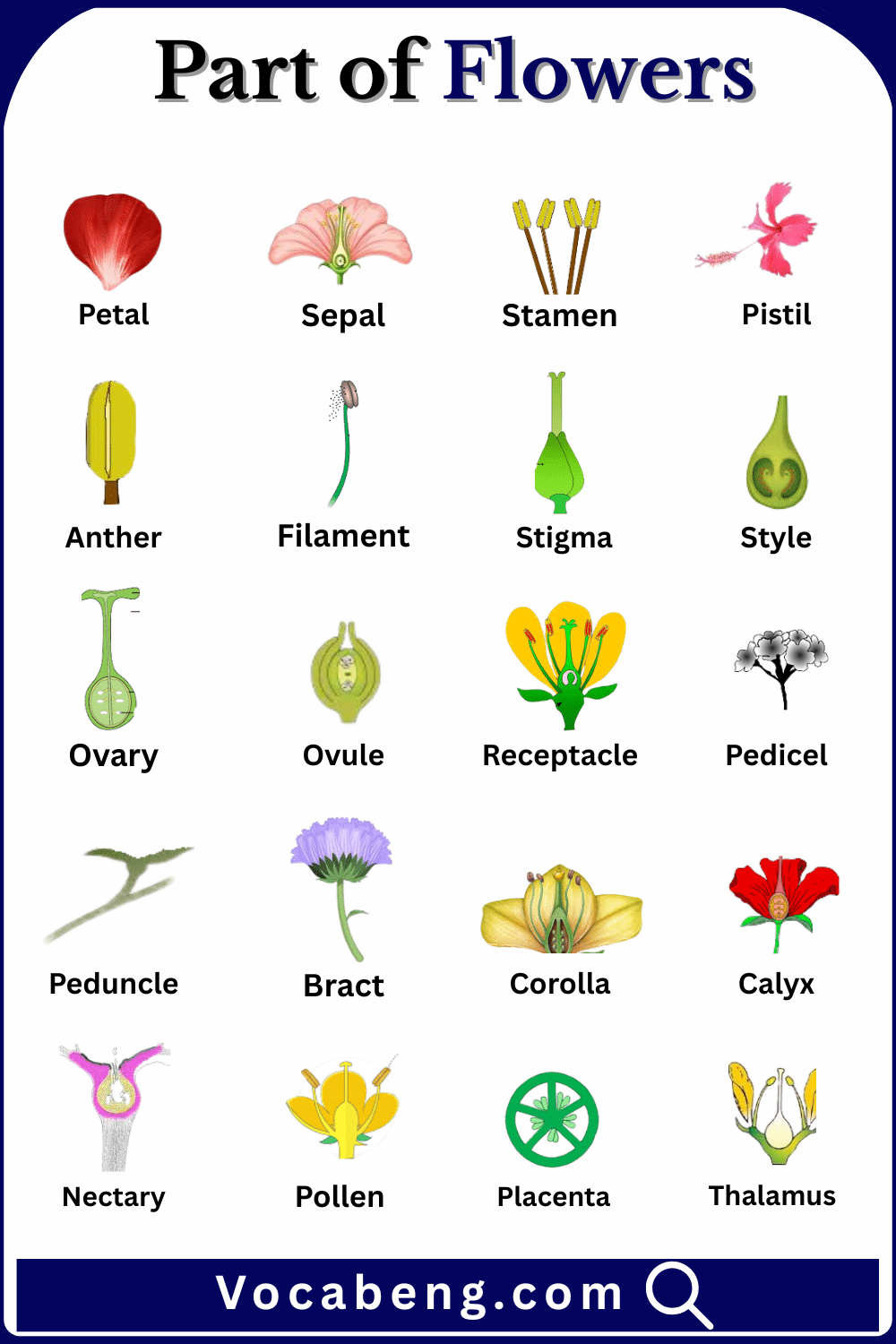
- Petal
- Sepal
- Stamen
- Pistil
- Anther
- Filament
- Stigma
- Style
- Ovary
- Ovule
- Receptacle
- Pedicel
- Peduncle
- Bract
- Corolla
- Calyx
- Nectary
- Pollen
- Placenta
- Thalamus
20 Parts of Flowers with Names with their Pictures
- Petal
Petal is the colorful part of a flower that surrounds the reproductive organs. It helps attract pollinators like insects and birds with its bright colors and scent, playing an important role in pollination.

- Sepal
Sepal is the outermost part of a flower that protects the developing bud. It is usually green and leaf-like, forming a protective layer around the flower before it opens.
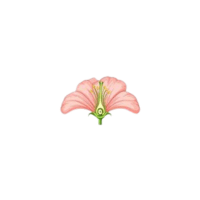
- Stamen
Stamen is the male reproductive part of a flower. It consists of anther and filament, and it produces pollen grains that are necessary for fertilization.
- Pistil
Pistil is the female reproductive part of a flower. It includes the stigma, style, and ovary, and is responsible for receiving pollen and producing seeds.

- Anther
Anther is the part of the stamen that produces and releases pollen grains. It is usually located at the top of the filament and plays a key role in reproduction.
- Filament
Filament is the thin stalk that supports the anther in a flower. It holds the anther in position so pollen can be easily released for pollination.
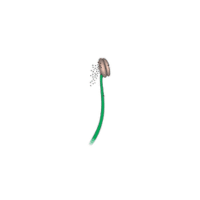
- Stigma
Stigma is the top part of the pistil where pollen lands during pollination. It is often sticky or rough to catch and hold pollen grains effectively.
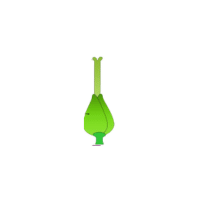
- Style
Style is the slender tube that connects the stigma to the ovary. It allows the pollen tube to grow and reach the ovule for fertilization.
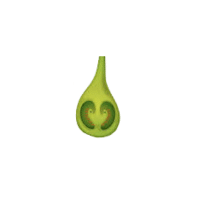
- Ovary
Ovary is the lower part of the pistil that contains ovules. After fertilization, it develops into a fruit that holds the seeds.

- Ovule
Ovule is the structure inside the ovary that contains the female reproductive cell. After fertilization, it develops into a seed.
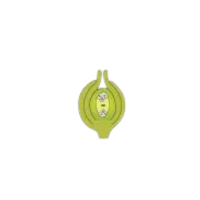
- Receptacle
Receptacle is the base part of the flower where all floral parts are attached. It supports the flower structure and connects it to the stem.

- Pedicel
Pedicel is the small stalk that supports an individual flower. It connects the flower to the main stem or branch.

- Peduncle
Peduncle is the main stalk that supports a single flower or a group of flowers. It connects the flower structure to the plant.

- Bract
Bract is a modified leaf found near the base of a flower. It often looks different from normal leaves and may help attract pollinators or protect the flower.

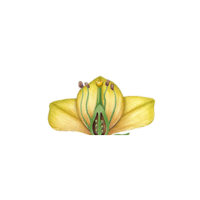
- Corolla
Corolla is the collective term for all the petals of a flower. It is usually colorful and helps attract pollinators.
- Calyx
Calyx is the collective term for all the sepals of a flower. It forms the outer protective layer of the flower bud.

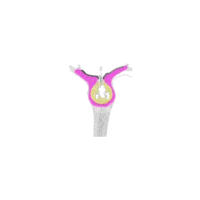
- Nectary
Nectary is a part of the flower that produces nectar. It attracts pollinators like bees and butterflies by providing a sweet liquid.
- Pollen
Pollen is a fine powder produced by the anther. It contains male reproductive cells and is essential for fertilization in flowering plants.

- Placenta
Placenta is the part inside the ovary where ovules are attached. It provides nutrients to the developing ovules.

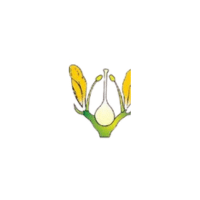
- Thalamus
Thalamus is the swollen base of the flower where all parts like petals, sepals, and stamens are attached. It supports and holds the floral organs together.
20 Parts of Flowers with Names with their Pictures
Learn more helpful articles