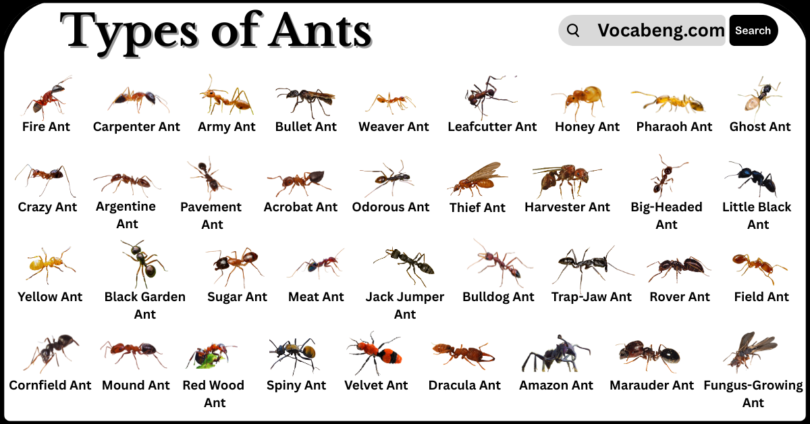

Ants are small insects, but they are very strong, organized, and hardworking. They live in colonies and can be found in gardens, forests, deserts, and even inside homes. There are many different types of ants around the world, and each type has its own size, color, behavior, and habitat. Some ants build large underground nests, while others live in trees or near water. In this article, you will learn Different Types of Ants and their Names in English with Pictures. This simple guide will help students and nature lovers easily recognize common ant species while improving their everyday English vocabulary.
What Are Ants?
Ants are small social insects that belong to the family Formicidae. They live together in large groups called colonies, where each ant has a specific job, such as finding food, protecting the nest, or caring for young ants. Ants are known for their teamwork, strength, and organized lifestyle.
They are found on every continent except Antarctica and play an important role in nature by improving soil, spreading seeds, and controlling other insects.
Ant Breed Name List in English
- Sugar Ant
- Meat Ant
- Jack Jumper Ant
- Bulldog Ant
- Trap-Jaw Ant
- Rover Ant
- Cornfield Ant
- Mound Ant
- Red Wood
- Ant
- Spiny Ant
- Velvet Ant
- Dracula Ant
- Amazon Ant
- Field Ant
- Marauder Ant
- Fungus-Growing Ant
- Slave-Making Ant
- Raiding Ant
- Nomad Ant
- Tunnel-Building Ant
Learn Types of Ants Names in English with Pictures
- Sugar Ant:
A sugar ant is a common ant attracted to sweet foods. It feeds on sugary substances like nectar and household sweets, often entering homes in search of food and forming visible trails.
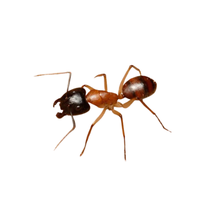
- Meat Ant:
A meat ant is an aggressive ant species that feeds on dead animals and insects. It plays an important role in cleaning the environment by removing organic waste.
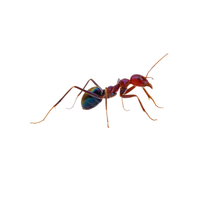
- Jack Jumper Ant:
A jack jumper ant is a jumping ant known for its painful sting. It is found in Australia and can leap when disturbed, using venom for defense.
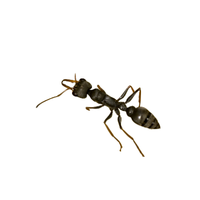
- Bulldog Ant:
A bulldog ant is a large, aggressive ant with strong jaws and a painful sting. It has good vision and hunts insects actively instead of following scent trails.
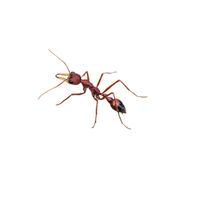
- Trap-Jaw Ant:
A trap-jaw ant has powerful jaws that snap shut quickly to catch prey or defend itself. It can also use its jaws to jump away from danger.
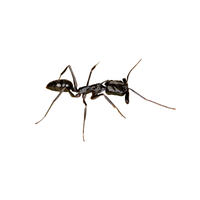
- Rover Ant:
A rover ant is a small ant that moves quickly in search of food. It often invades homes and feeds on various food sources, including sweets and proteins.
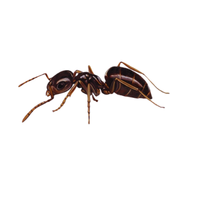
- Cornfield Ant:
A cornfield ant lives in agricultural areas and feeds on honeydew from insects like aphids. It protects these insects in exchange for food.
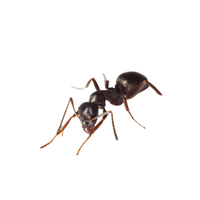
- Mound Ant:
A mound ant builds large soil mounds as nests. It lives underground and feeds on insects and plant materials, helping in soil aeration.
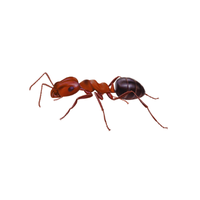
- Red Wood Ant:
A red wood ant is a forest-dwelling species that builds large nests from twigs. It feeds on insects and helps control forest pests.
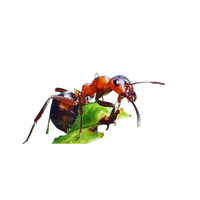
- Spiny Ant:
A spiny ant has a body covered with small spines for protection. It lives in trees or plants and feeds on nectar and small insects.
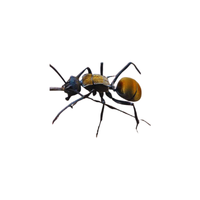
- Velvet Ant:
A velvet ant is actually a type of wasp, not a true ant. It has a hairy body and a painful sting, often found in dry environments.
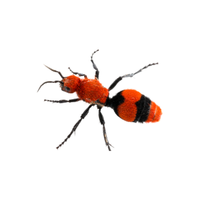
- Dracula Ant:
A Dracula ant is known for feeding on the blood-like fluids of its larvae. It is found in tropical regions and has unique feeding behavior.
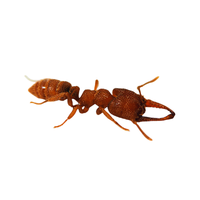
- Amazon Ant:
An Amazon ant is a parasitic ant that captures workers from other colonies. It depends on them for survival and does not perform its own labor.
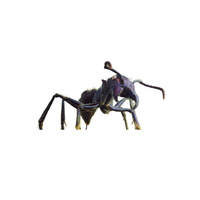
- Field Ant:
A field ant lives in open areas like grasslands. It builds underground nests and feeds on insects and plant substances.
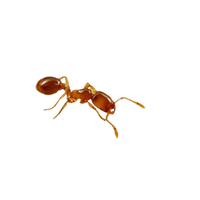
- Marauder Ant:
A marauder ant forms large colonies and moves in groups to find food. It feeds on insects and other small creatures.

- Fungus-Growing Ant:
A fungus-growing ant cultivates fungus inside its nest. It feeds on the fungus rather than directly eating plant material.
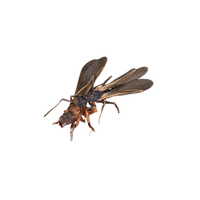
- Slave-Making Ant:
A slave-making ant invades other ant colonies and captures their workers. These captured ants are forced to work for the new colony.
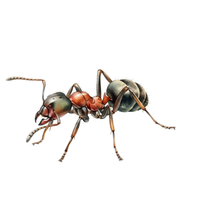
- Raiding Ant:
A raiding ant moves in organized groups to attack other colonies or find food. It is aggressive and works together in large numbers.
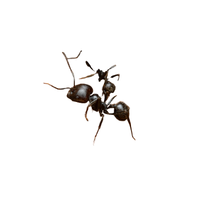
- Nomad Ant:
A nomad ant does not build permanent nests. It moves from place to place in search of food, often forming temporary living structures.
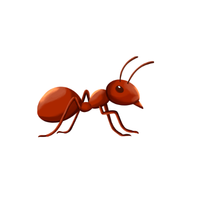
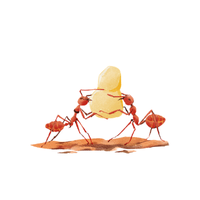
- Tunnel-Building Ant:
A tunnel-building ant creates complex underground tunnels. These tunnels provide shelter, storage, and protection for the colony while helping in soil movement.
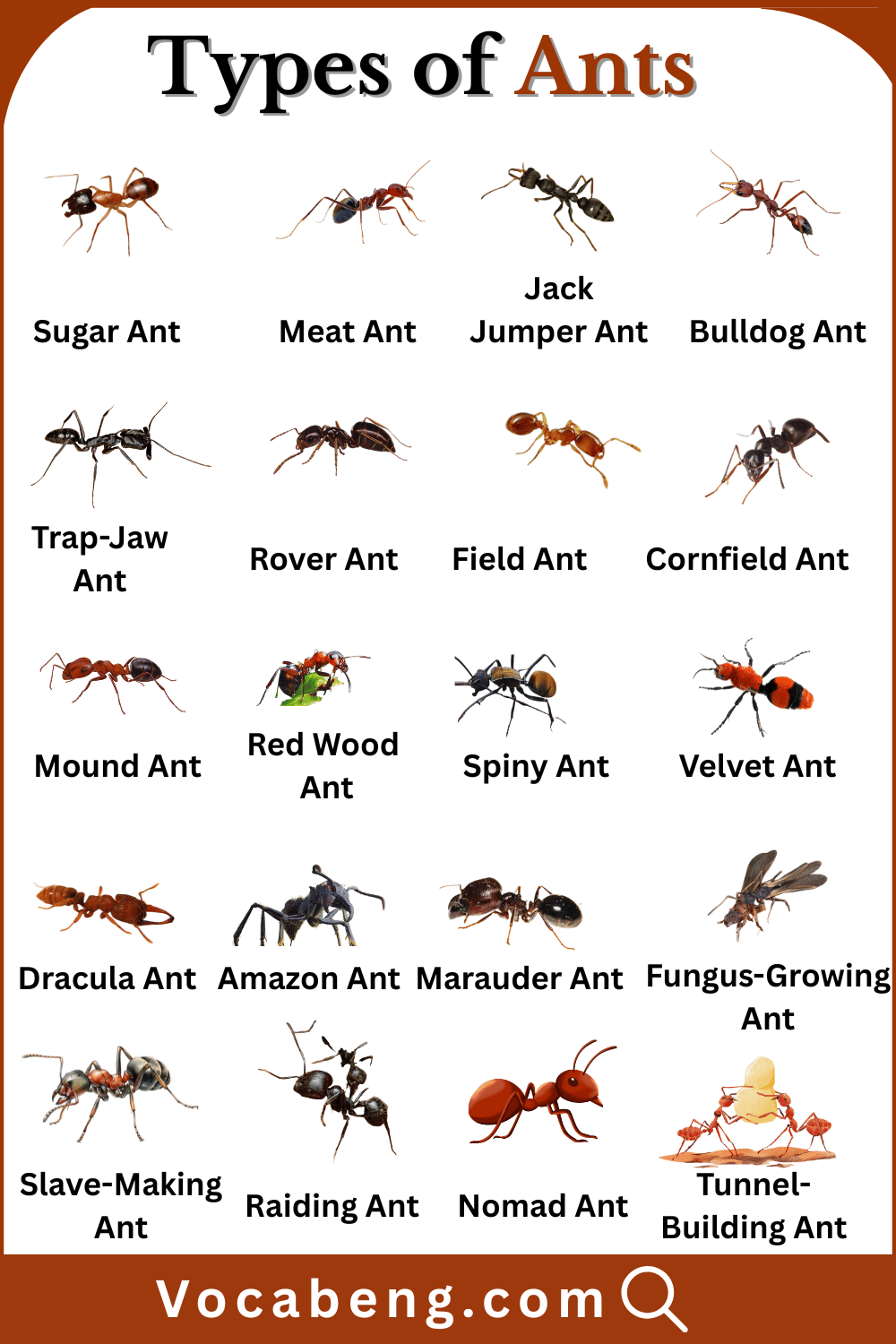
Learn Types of Ants Names in English with Pictures
Types of Ants with Names in English
- Fire Ant
- Carpenter Ant
- Army Ant
- Bullet Ant
- Weaver Ant
- Leafcutter Ant
- Honey Ant
- Crazy Ant
- Argentine
- Ant
- Pavement
- Ant
- Acrobat Ant
- Odorous Ant
- Thief Ant
- Pharaoh Ant
- Harvester Ant
- Big-Headed Ant
- Ghost Ant
- Little Black
- Ant
- Yellow Ant
- Black Garden Ant
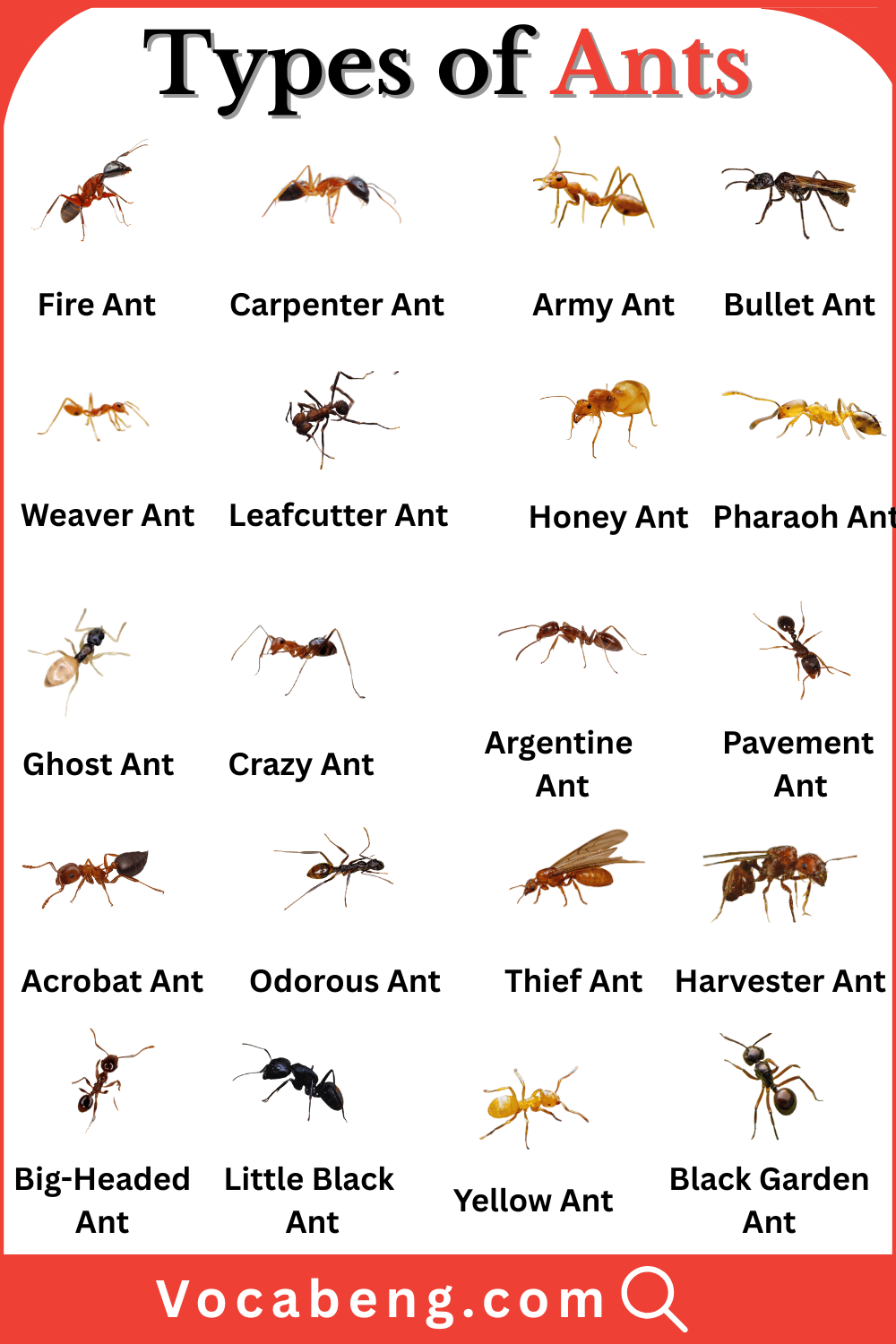
Different Types of Ants Breeds Names in English with Images
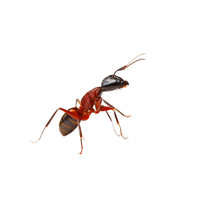
- Fire Ant:
A fire ant is a small, aggressive ant known for its painful sting. It builds large mounds and attacks in groups when disturbed, feeding on insects, plants, and food scraps.
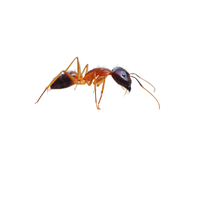
- Carpenter Ant:
A carpenter ant is a large ant that nests in wood. It does not eat wood but digs tunnels to create nests, sometimes damaging wooden structures.
- Army Ant:
An army ant is a nomadic ant that travels in large groups. It hunts insects and small animals, forming temporary nests as it moves.
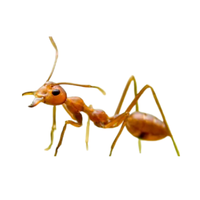
- Bullet Ant:
A bullet ant is known for having one of the most painful stings among insects. It lives in tropical forests and uses its sting for defense.
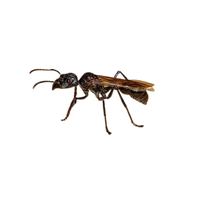
- Weaver Ant:
A weaver ant builds nests by joining leaves using silk produced by its larvae. It lives in trees and feeds on insects and nectar.
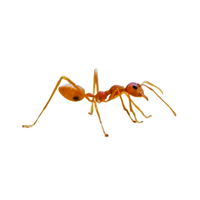
- Leafcutter Ant:
A leafcutter ant cuts leaves and carries them to its nest. It uses the leaves to grow fungus, which it eats as its main food source.
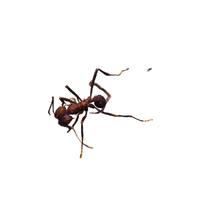
- Honey Ant:
A honey ant stores liquid food inside certain worker ants. These ants act as living storage, providing food for the colony during scarcity.
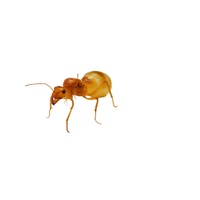
- Crazy Ant:
A crazy ant moves in an irregular, fast pattern. It is known for invading homes and feeding on a wide range of food sources.
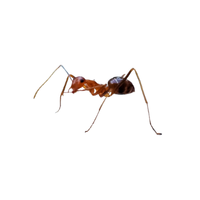
- Argentine Ant:
An Argentine ant is an invasive species that forms very large colonies. It spreads quickly and competes with native ants for food and space.
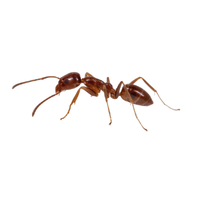
- Pavement Ant:
A pavement ant lives under sidewalks and stones. It builds nests in cracks and feeds on food scraps and small insects.
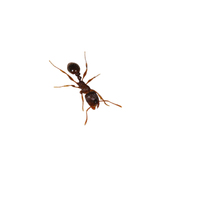
- Acrobat Ant:
An acrobat ant raises its abdomen over its head when threatened. It nests in wood or soil and feeds on insects and sweet substances.
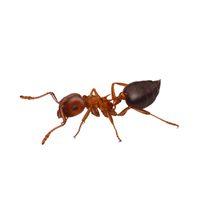
- Odorous Ant:
An odorous ant releases a strong smell when crushed. It feeds on sweets and often enters homes in search of food.
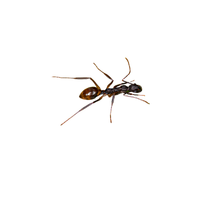
- Thief Ant:
A thief ant is very small and steals food from other ant colonies. It feeds on insects, grease, and stored food.
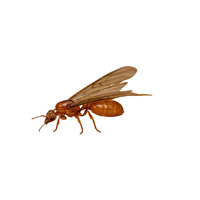
- Pharaoh Ant:
A pharaoh ant is a tiny household pest that lives indoors. It forms large colonies and feeds on a variety of foods.
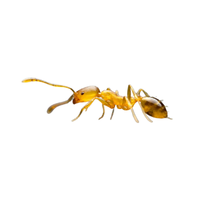
- Harvester Ant:
A harvester ant collects seeds and stores them in its nest. It lives in dry areas and plays a role in seed distribution.
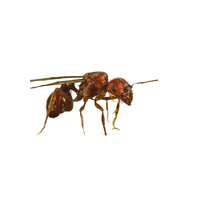
- Big-Headed Ant:
A big-headed ant has workers with unusually large heads. It uses strong jaws to defend the colony and process food.
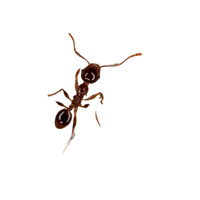
- Ghost Ant:
A ghost ant is a small, pale ant with a dark head. It is often found indoors and feeds on sweet and greasy foods.
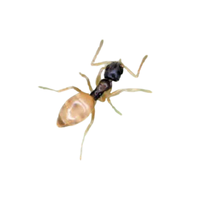
- Little Black Ant:
A little black ant is a small, dark ant that forms large colonies. It feeds on sweets and often invades homes.
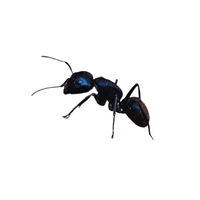
- Yellow Ant:
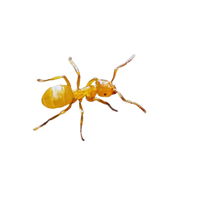
A yellow ant is a small ant with a pale yellow body. It lives in soil and feeds on insects and plant substances.
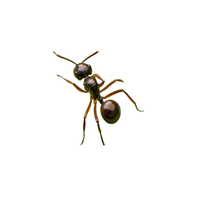
- Black Garden Ant:
A black garden ant is a common outdoor ant found in gardens. It feeds on insects and sweet substances and builds nests underground.
Different Types of Ants Breeds Names in English with Images
List of Ant Breed in English
- Tree Ant
- Ground Ant
- Desert Ant
- Forest Ant
- Grassland Ant
- Queen Ant
- Worker Ant
- Soldier Ant
- Winged Ant
- Male Ant
- Social Ant
- Aggressive Ant
- Stinging Ant
- Non-Stinging Ant
- Fast-Moving Ant
- Ancient Ant
- Fossil Ant
- Rare Ant
- Endangered Ant
- Majestic Ant
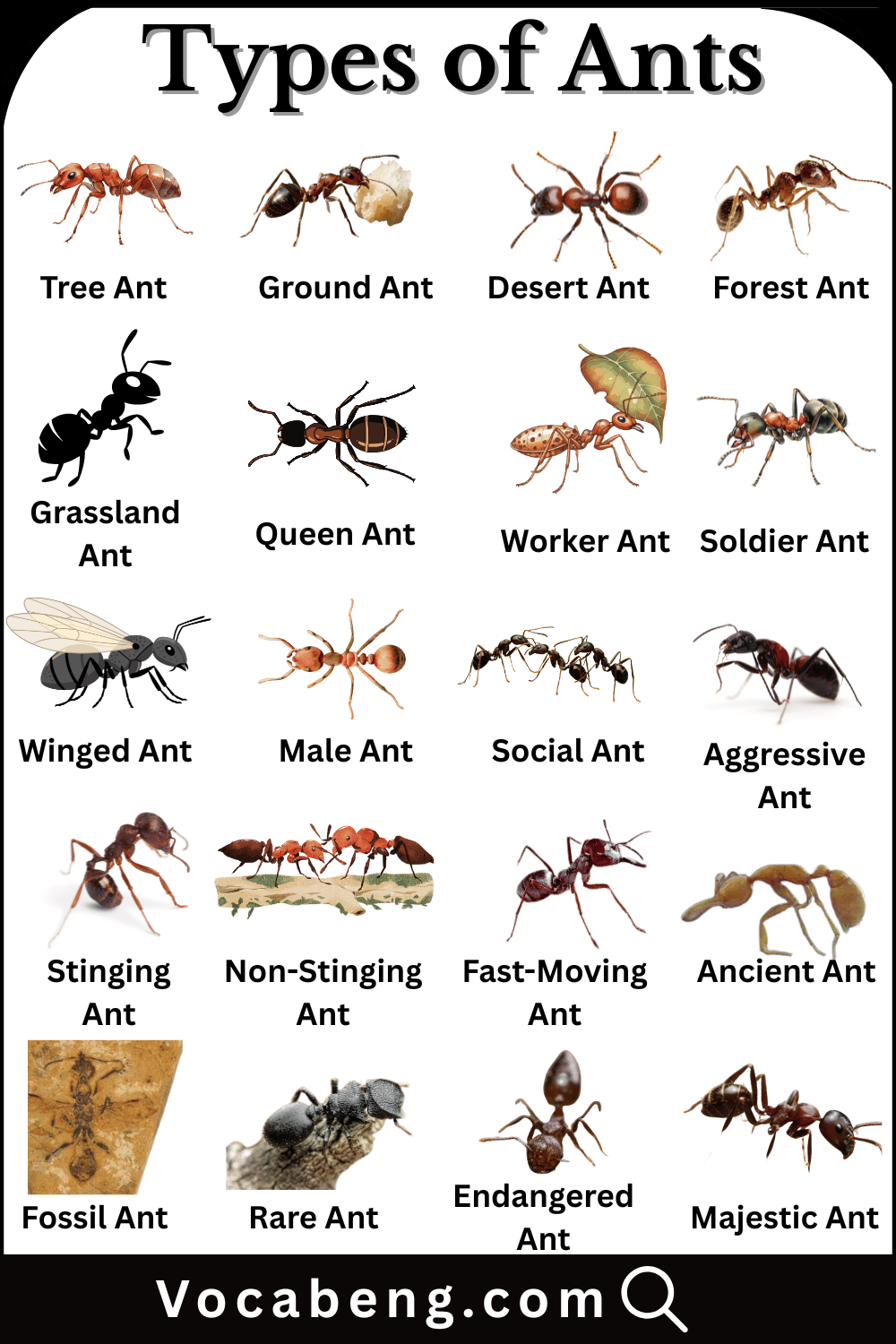
Ants Breeds Names in English with their Images
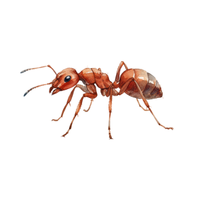
- Tree Ant:
A tree ant is an ant that lives mainly in trees. It builds nests in branches or leaves and feeds on insects and plant fluids, adapting well to life above the ground.
- Ground Ant:
A ground ant lives in soil and builds underground nests. It feeds on insects, seeds, and organic matter, playing an important role in soil health.
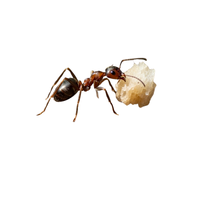
- Desert Ant:
A desert ant is adapted to hot, dry environments. It can survive extreme heat and searches for food like insects and plant material in sandy areas.
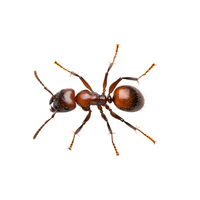
- Forest Ant:
A forest ant lives in wooded areas and builds nests from soil, leaves, or twigs. It feeds on insects and helps maintain forest ecosystems.
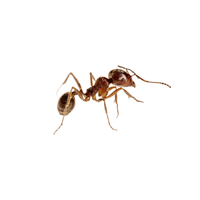
- Grassland Ant:
A grassland ant lives in open grassy areas. It feeds on seeds and insects and builds nests in soil, contributing to the ecosystem.
- Queen Ant:
A queen ant is the reproductive female in a colony. Its main role is to lay eggs and ensure the growth and survival of the colony.
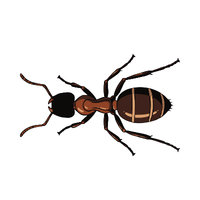
- Worker Ant:
A worker ant is a female ant that does not reproduce. It gathers food, builds nests, and cares for young, supporting the colony’s daily activities.
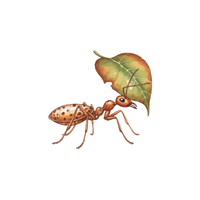
- Soldier Ant:
A soldier ant is a specialized worker with a larger body and strong jaws. It protects the colony and helps defend against threats.

- Winged Ant:
A winged ant has wings used for mating flights. After mating, it may lose its wings and start a new colony.
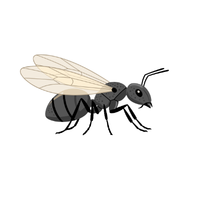
- Male Ant:
A male ant’s main role is reproduction. It mates with a queen during flight and usually dies soon after.
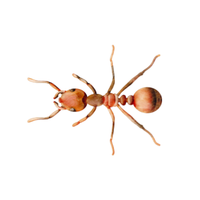
- Social Ant:
A social ant lives in organized colonies with different roles. It works together with others for survival, food gathering, and nest building.
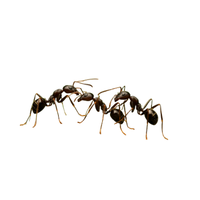
- Aggressive Ant:
An aggressive ant defends its territory strongly. It may attack intruders and use biting or stinging to protect its colony.
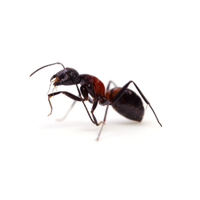
- Stinging Ant:
A stinging ant has a stinger used for defense. It injects venom to protect itself and its colony from threats.
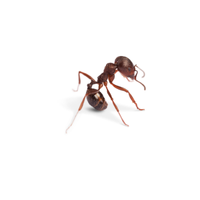
- Non-Stinging Ant:
A non-stinging ant does not have a functional stinger. It relies on biting or chemical sprays for defense.

- Fast-Moving Ant:
A fast-moving ant is known for its speed. It quickly searches for food and avoids predators using rapid movement.
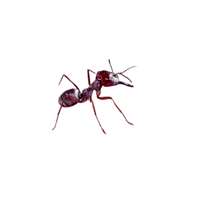
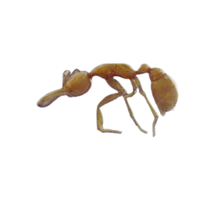
- Ancient Ant:
An ancient ant refers to early ant species that existed long ago. They show how ants evolved over millions of years.
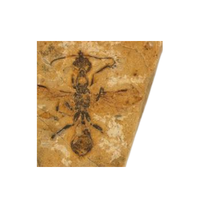
- Fossil Ant:
A fossil ant is an ant preserved in rock or amber. It provides information about ancient species and their environments.
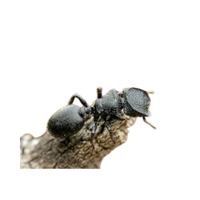
- Rare Ant:
A rare ant is a species found in limited numbers or locations. It may be difficult to study due to its low population.
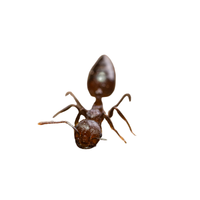
- Endangered Ant:
An endangered ant is at risk of extinction due to habitat loss or environmental changes. It requires conservation efforts for survival.
- Majestic Ant:
A majestic ant refers to an ant admired for its appearance or behavior. It highlights the beauty and complexity of ant life.
Ants Breeds Names in English with their Images
Parts of an Ant
Learning the body parts of an ant is useful for both biology and English vocabulary.
| Body Part | Function |
|---|---|
| Head | Holds the eyes, antennae, and mouth |
| Antennae | Detect smells and touch |
| Mandibles | Bite, carry food, and defend |
| Thorax | Supports the legs and wings (if present) |
| Legs | Help in walking and climbing |
| Abdomen | Contains important internal organs |
| Stinger | Used for defense in some species |
Types of Ants According to Their Roles
Every ant colony has different members with specific responsibilities.
Queen Ant
The queen lays eggs and is usually the largest ant in the colony.
Worker Ant
Worker ants gather food, build nests, clean tunnels, and care for young ants.
Soldier Ant
Soldier ants protect the colony from enemies using their powerful jaws.
Male Ant
Male ants mainly exist to mate with the queen. They usually die shortly after mating.
Where Do Ants Live?
Ants are found in many different environments, including:
- Forests
- Gardens
- Farms
- Grasslands
- Deserts
- Mountains
- Tropical rainforests
- Inside homes
- Under rocks
- Tree trunks
What Do Ants Eat?
Different ant species eat different types of food.
Common foods include:
- Seeds
- Small insects
- Nectar
- Honeydew from aphids
- Fruits
- Sugar
- Bread crumbs
- Dead insects
- Fungus
- Plant materials
Why Are Ants Important?
Ants play an important role in maintaining healthy ecosystems.
Improve Soil
They dig tunnels that allow air and water to reach plant roots.
Spread Seeds
Many plants depend on ants to carry and spread their seeds.
Control Pests
Ants eat harmful insects that damage crops and gardens.
Recycle Organic Matter
They help break down dead plants and animals, keeping nature clean.
Interesting Facts About Ants
- Ants can carry objects many times heavier than their own body weight.
- Some queen ants can live for more than 20 years.
- Ants communicate using chemicals called pheromones.
- There are over 13,000 known species of ants worldwide.
- Ant colonies may contain just a few dozen ants or millions of individuals.
- Leafcutter ants are among the few animals that practice farming by growing fungus.
- Ants are found on every continent except Antarctica.
Difference Between Ants and Termites
| Ants | Termites |
|---|---|
| Narrow waist | Thick waist |
| Bent antennae | Straight antennae |
| Usually black, brown, or red | Usually pale white or cream |
| Eat many different foods | Mostly eat wood and cellulose |
| Belong to Formicidae | Belong to Isoptera (or Blattodea in modern classification) |
Vocabulary Related to Ants
| Word | Meaning |
|---|---|
| Colony | A large group of ants living together |
| Nest | The home of ants |
| Queen | Female ant that lays eggs |
| Worker | Ant that performs daily tasks |
| Larva | Young stage of an ant |
| Pupa | Stage before becoming an adult ant |
| Mandibles | Strong jaws used for biting |
| Pheromone | Chemical signal used for communication |
Tips for Learning Ant Names in English
- Learn one ant species each day.
- Match each name with its picture.
- Practice spelling the names aloud.
- Watch educational videos about ants.
- Compare different species to remember their characteristics.
- Use flashcards to improve vocabulary.
Learn More Helpful Articles